Diversifying Financing Strategies for Home Builders
July 1, 2024
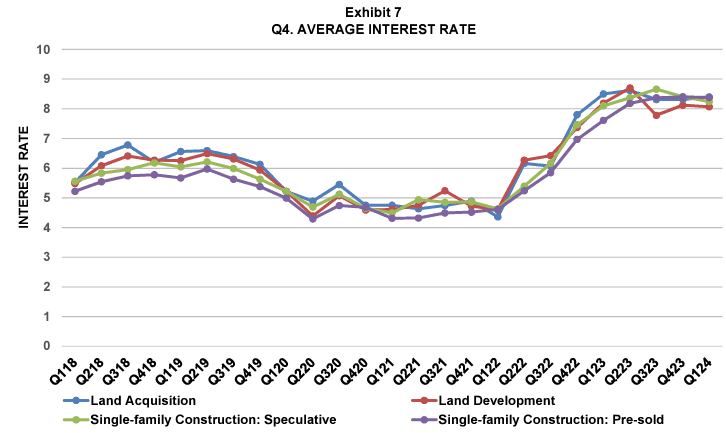
Recent shifts in construction financing markets have propelled investor-driven and private financing options to the forefront of the home building industry. The strongest contributor to the shift is the average interest rate on single-family construction loans soaring from 4% to over 8% in less than two years(1). As banks adopt more conservative lending standards in the construction industry, Builders and Land Developers have seen even tougher conditions to secure financing on deals. For instance, a recent NAHB survey concluded over 95% of Builders and Developers have not seen the availability of loans improve, with nearly 40% indicating lending conditions continue to worsen into 2024(1).
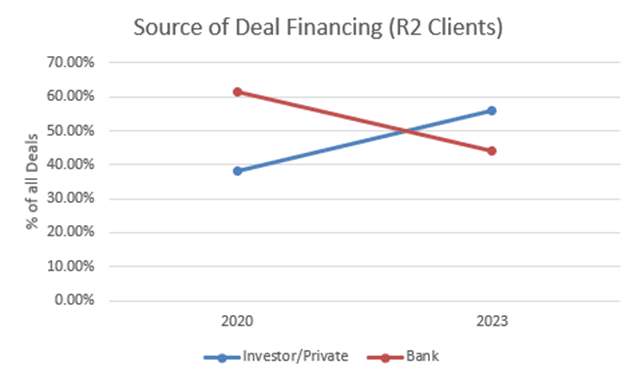
In recent years, R2 Management clients have witnessed the dramatic shift towards private financing. Our clients’ share of deals tied to traditional bank financing has reached historic lows internally, with investors and hard money lenders outpacing bank financing-led deals. The change to investor-driven deals has left Builders with two pressing questions: (1) What types of investors are leading the market shift, and (2) How to establish strong relationships with investors to maintain competitive financing options.
A combination of debt and equity financing options from investors have emerged as key sources behind residential construction projects in recent years. As the economy sees slowing returns in industries such as technology and retail, investors are driven to allocate funds to other industries to maximize returns. The shortage of residential real estate continues to grow in markets across the country, which leaves investors to conclude demand-driven factors on residential real estate will continue to hold strong in future years.
On the heels of soaring interest rates, lenders have seen a spike in internal rates of return. The average effective interest rate for horizontal and vertical development has risen to above 13% in Q1 2024, up from 7% in Q1 2022(1). While financing construction deals would not have been a attractive rate of return to a hard money lender two years ago, today’s current financing rates provide an adequate return for an investor who has an appetite for construction-specific risks.
In anticipation of searching for investors, Builders should focus on improving internal factors to become more attractive partners in deals. Some factors investors weigh when determining Builders for projects include:
Experience
Investors realize they critically rely on the Builder to complete the project, so they will conduct a thorough review of the Builder’s knowledge regarding specific types of projects. Investors will also inquire about past quality of projects completed to ensure they are partnering with a quality Builder.
Financial Stability
Investors will review past financial performance on deals and current financial health of the Builder. It is vitally important a Builder has clean, strong financial statements and strong liquidity when presenting to potential investors.
Communication
It is important for investors to be up to date on where they stand in a deal. This can include changes to list prices, costs, anticipated closing dates, and the ratio of speculative vs. pre-sold deals. Builders should adopt effective project management practices internally to consistently report on these items.
R2 Management is The Builder’s CFO, combining decades of experience in the home building industry with connections to a variety of Investors searching for Builders to partner with and deals to invest. We have directly managed over 18,000 Closings and $3.7 Billion in revenue for Builders and Developers. Our team of tenured professionals in the residential construction industry allow scaling or established Builders to rely on much-needed expertise without the tremendous overhead burden.